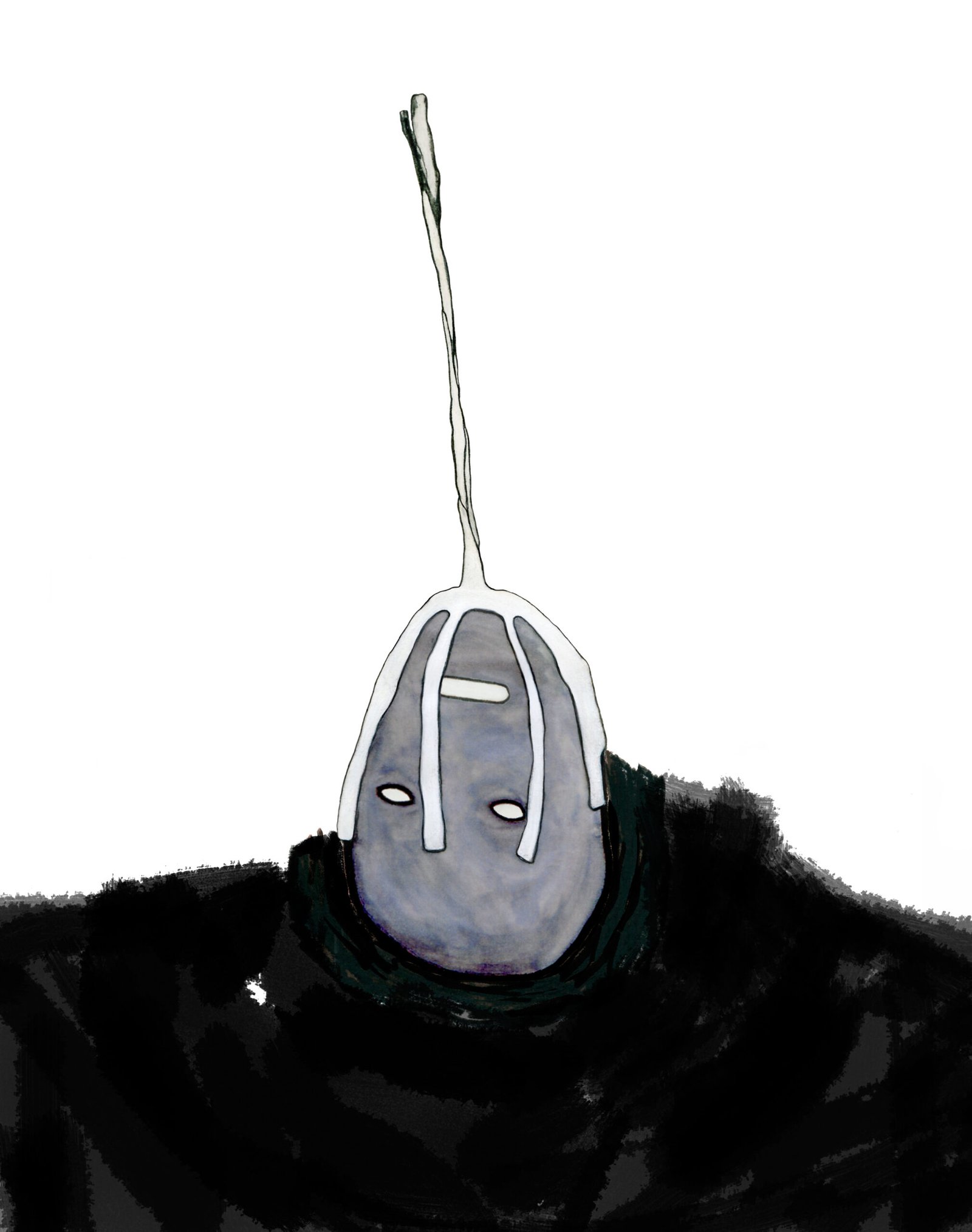
A Discreet Pulse, a Slow Breath
In Alain Quesnel’s work, a discreet pulse, a slow breath traverses paper, cotton, copper wire—materials that become porous bodies open to the invisible. He composes worlds where matter speaks, remembers, transforms. His practice, both tactile and meditative, unfolds within a poetics of mutation, connection, and energy. It is not about representation, but revelation—of what circulates, what vibrates, what fades.

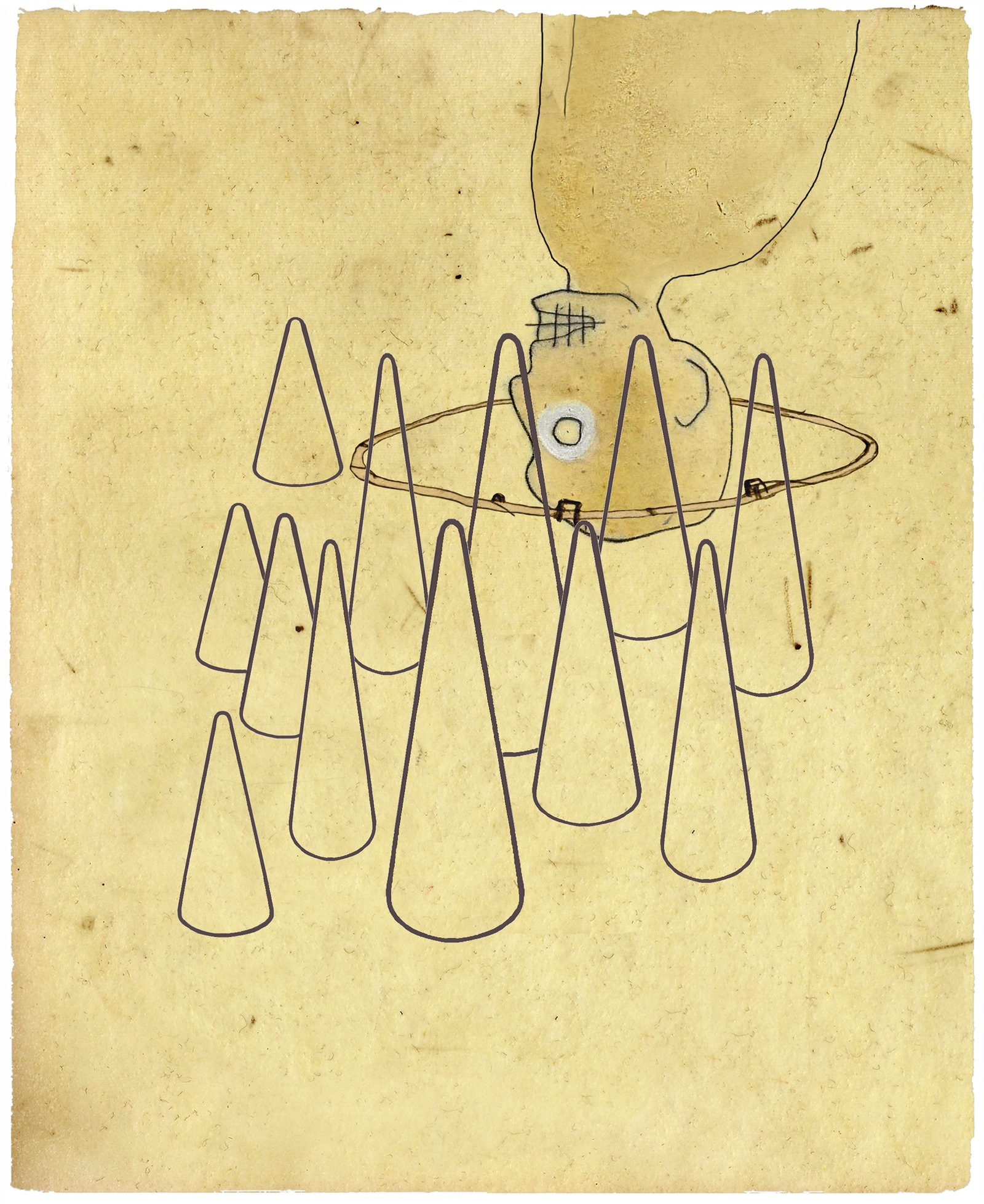
Works on Paper: Fragments of Suspended Universes
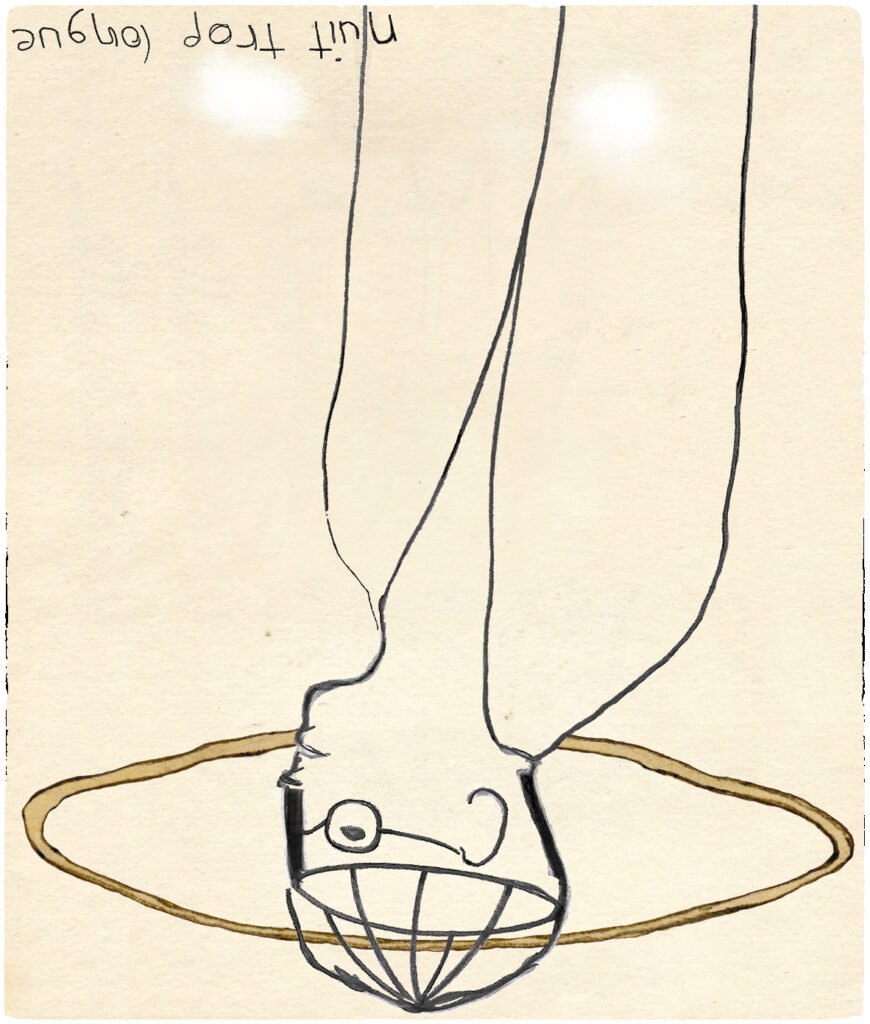
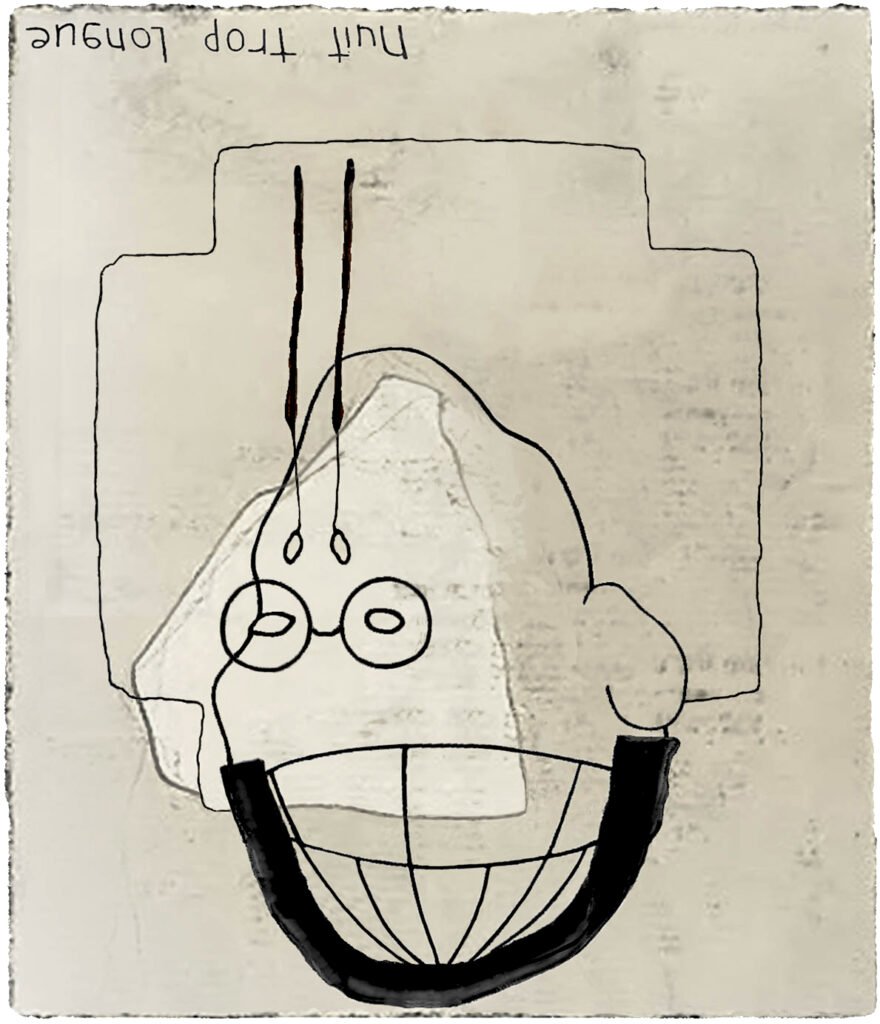
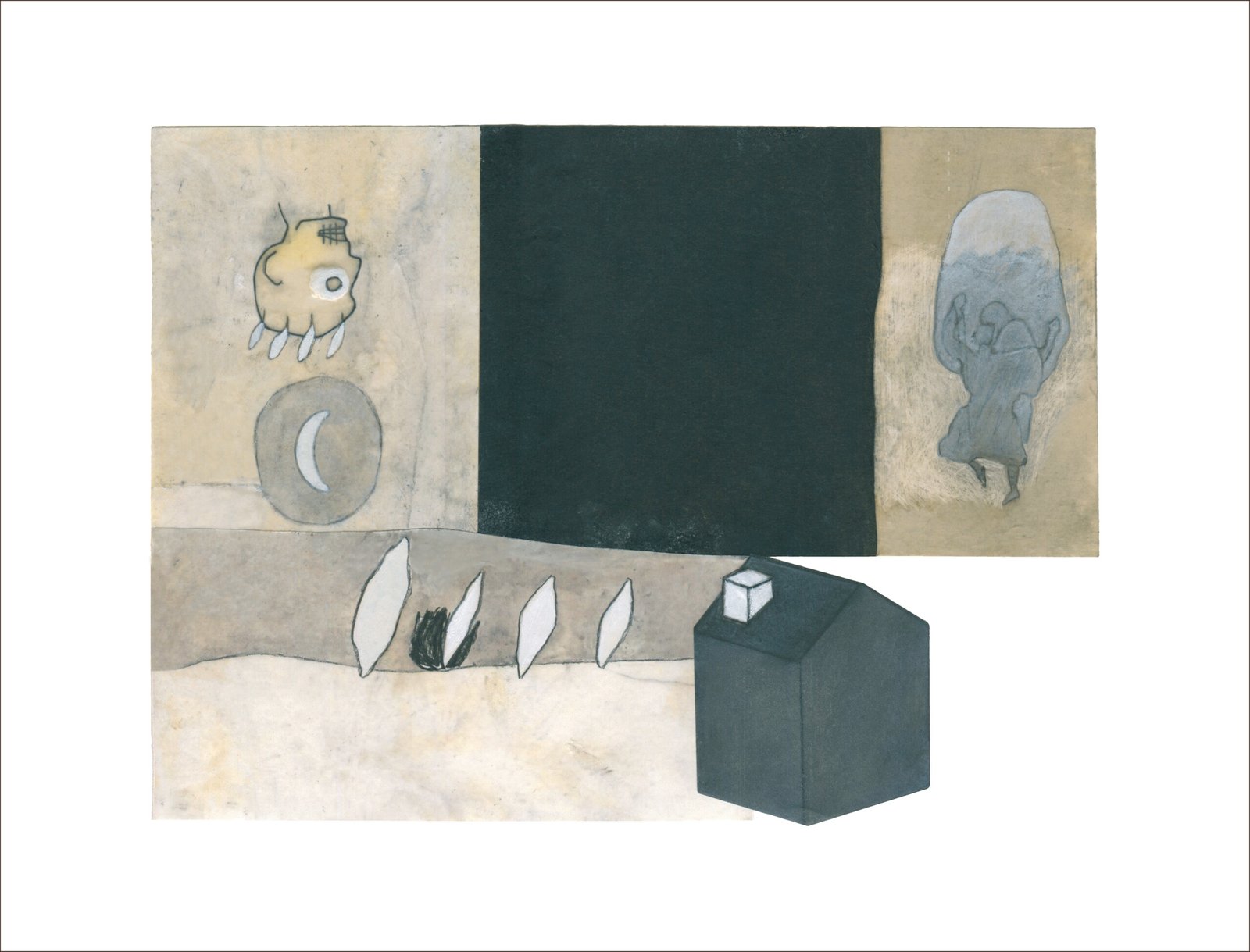
In his drawing series — “Nuit trop longue”, “La bouche pleine de terre”, “Petite cosmologie de poche”, “Pas vu, pas pris – Dessin vagabond” — Alain Quesnel approaches paper as a resonant territory. Each sheet becomes an echo chamber, a site where gestures inscribe themselves like murmurs. Ink, black chalk, oil paint, and digital traces settle with restraint, in an economy of means that allows the essential to emerge.
The compositions seem born of lucid dreams: floating forms, intimate constellations, imaginary roots. Black is deep but never opaque—it opens breaches, passages. White is not empty—it breathes. Alain Quesnel works through layering, erasure, friction. He does not draw, he listens. Each mark is memory, each silence presence.
An Alchemy of Gesture and Material
For Alain Quesnel, paper is never neutral. It is already charged, already alive, sometimes bearing folds, wear, scars. It becomes the site of a gentle alchemy where elements converse. He does not seek to dominate matter, but to accompany it in its metamorphoses. Pigments dilute, fibers stretch, volumes hollow. He composes with accidents, resistances, surprises.
This approach, at once intuitive and rigorous, gives rise to works that do not impose themselves but offer themselves—like confidences. They invite us to slow down, to look differently, to enter an expanded temporality. Time, in Alain Quesnel’s work, is not linear: it is circular, spiral, woven of returns and bifurcations.
Installations and Volumes: Territories of Connivance
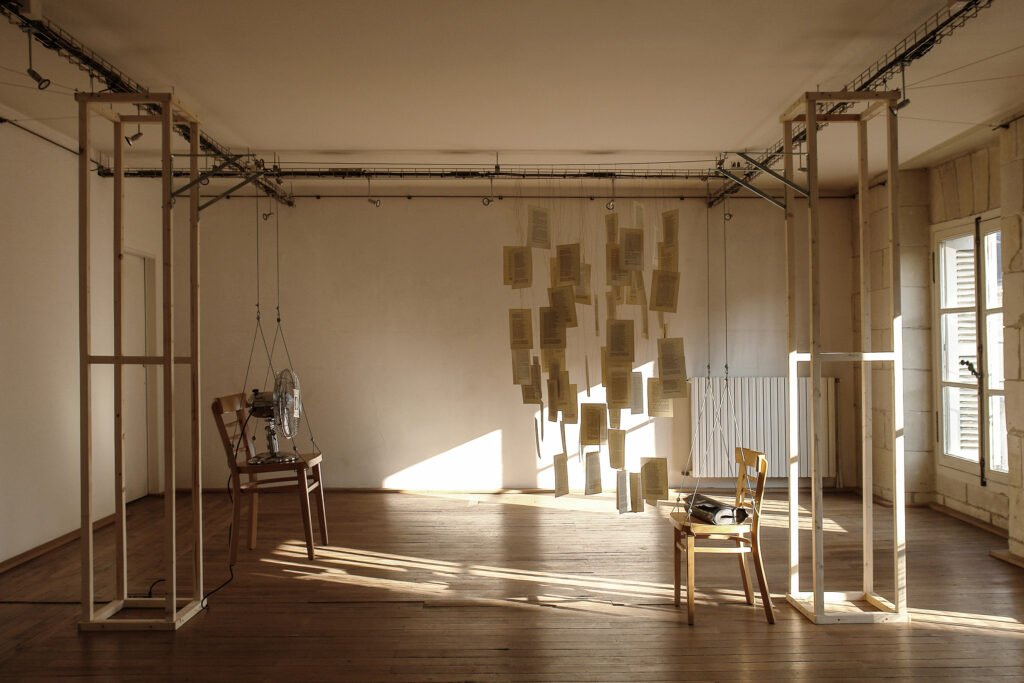
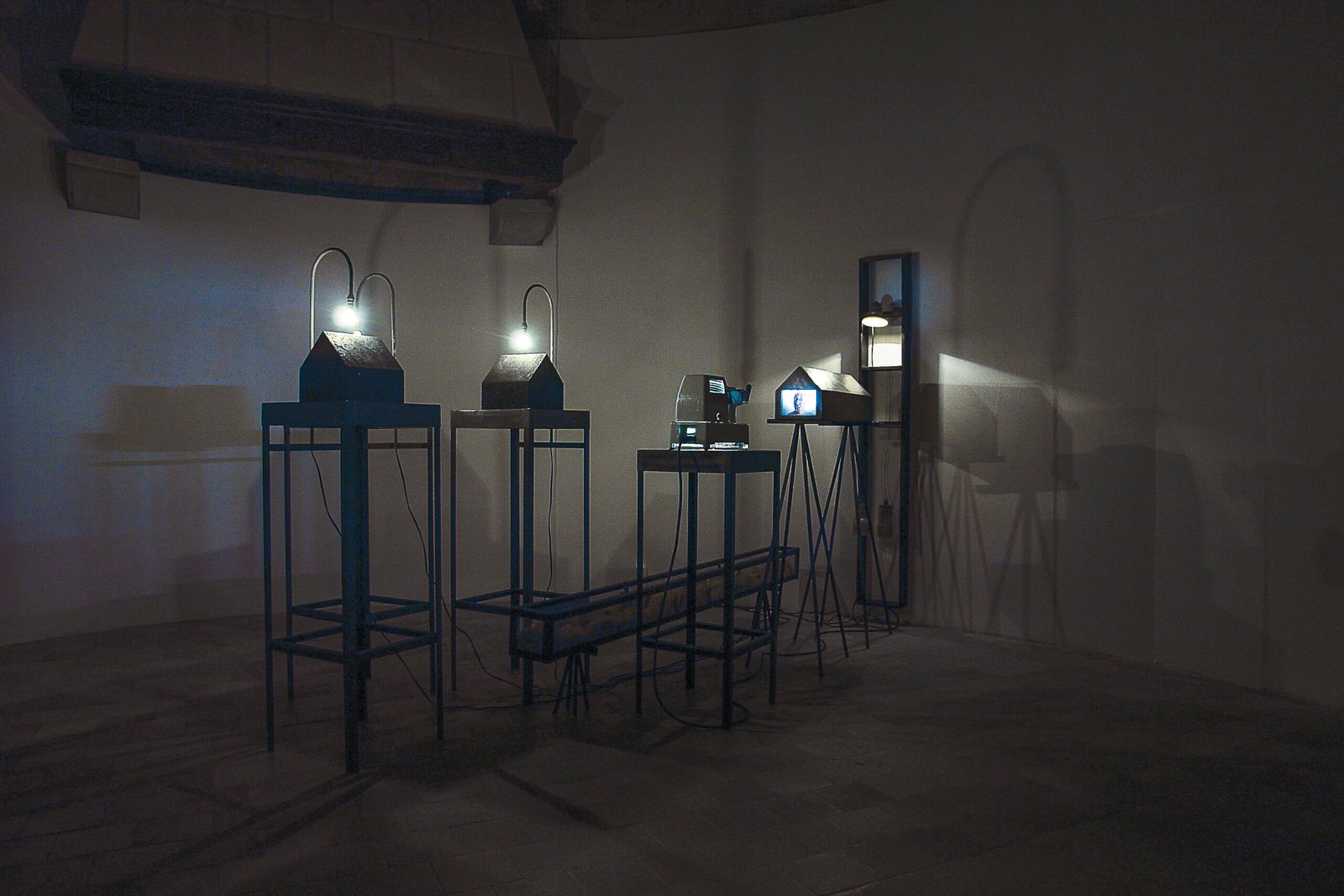
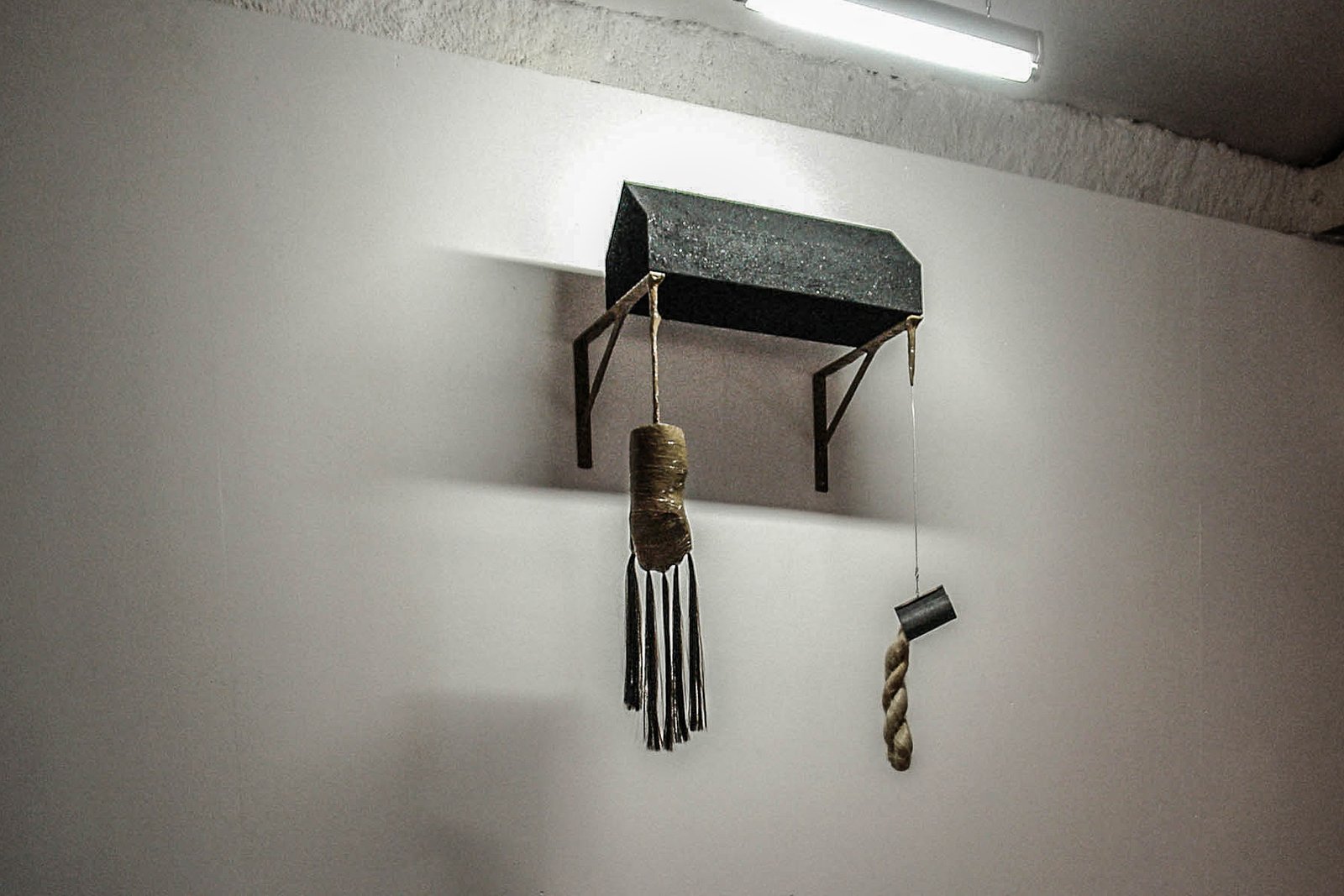
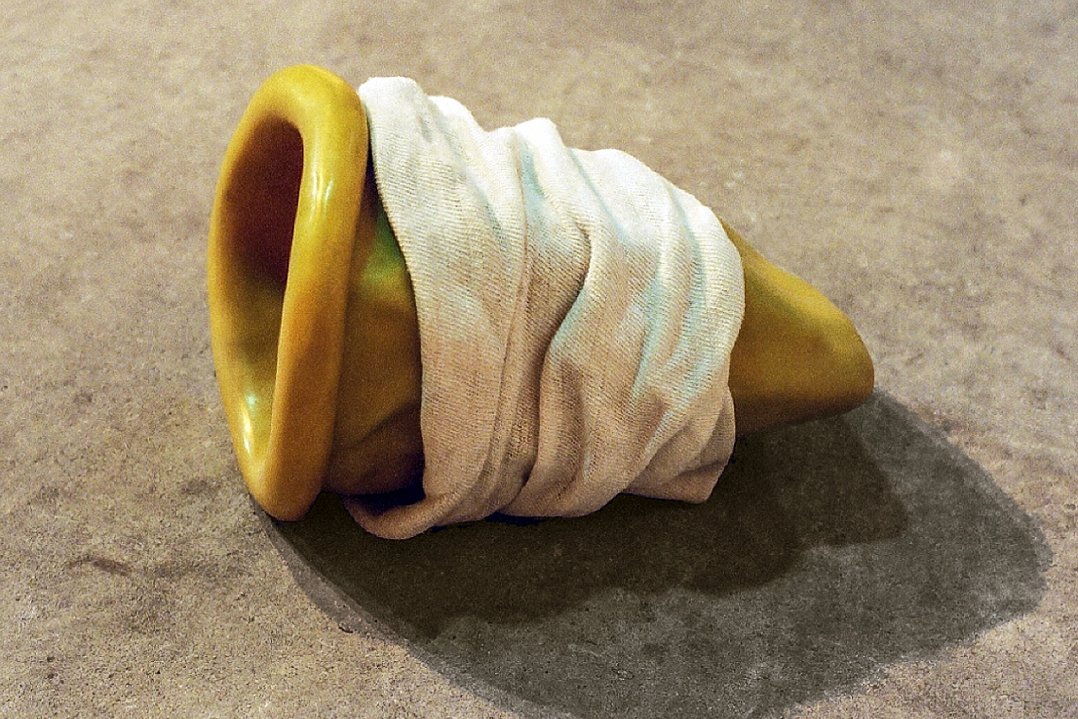
In his installations — “L’art d’aimer « , » La maison du grand Pan pour le PinPin « , » Toute une histoire » — Alain Quesnel conceives space as a site of relation. Materials are chosen for their capacity to dialogue: cotton, raw white clay, wax, bulbs, neon, papier-mâché. Each element carries energy, memory, a potential for transformation.
These works are never fixed. They evolve with site, light, and gaze. They recombine, reorient, rewrite themselves. They are stellar cartographies, poetic landscapes where tensions circulate, connections weave. Copper becomes vein, cotton becomes breath, light becomes heartbeat.
Energy as Vital Principle
One of the guiding threads of Alain Quesnel’s practice is energy—not mechanical, but human: of bodies, thoughts, emotions. It circulates through his works like a wave, a vibration. Electric wires, neon lights, plays of shadow and light translate this inner dynamic. Yet this energy is also symbolic: it speaks of desire, memory, transformation.
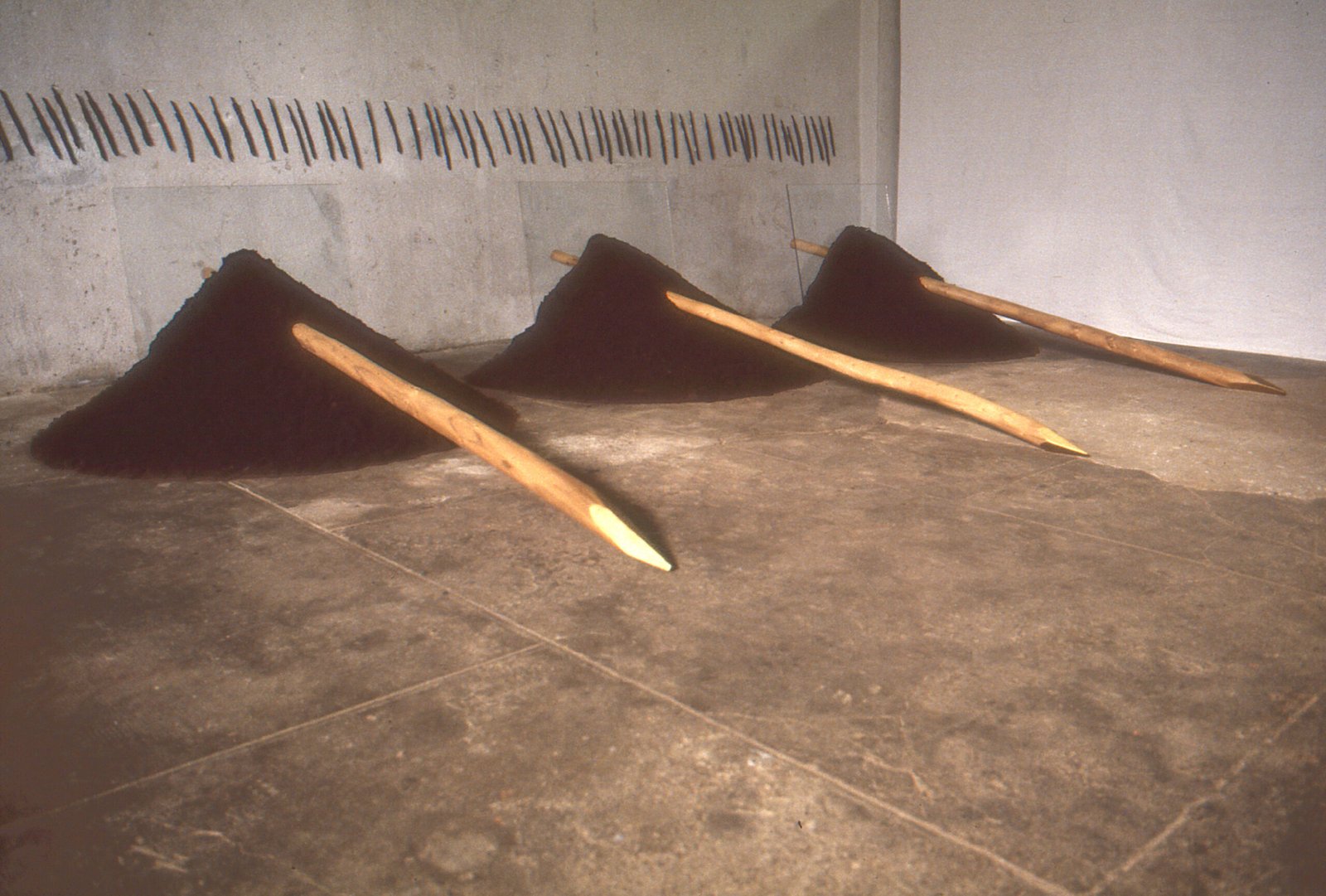
Charcoal, sanded, bears witness to mutation. Paper, folded or pigmented, becomes a site of passage. Raw white clay, light, tensions between materials tell a story of metamorphosis. Nothing is stable; everything is becoming. The artist invites us to perceive these subtle movements, these invisible flows that traverse the world.
Drawings: Vibratory Minimalism
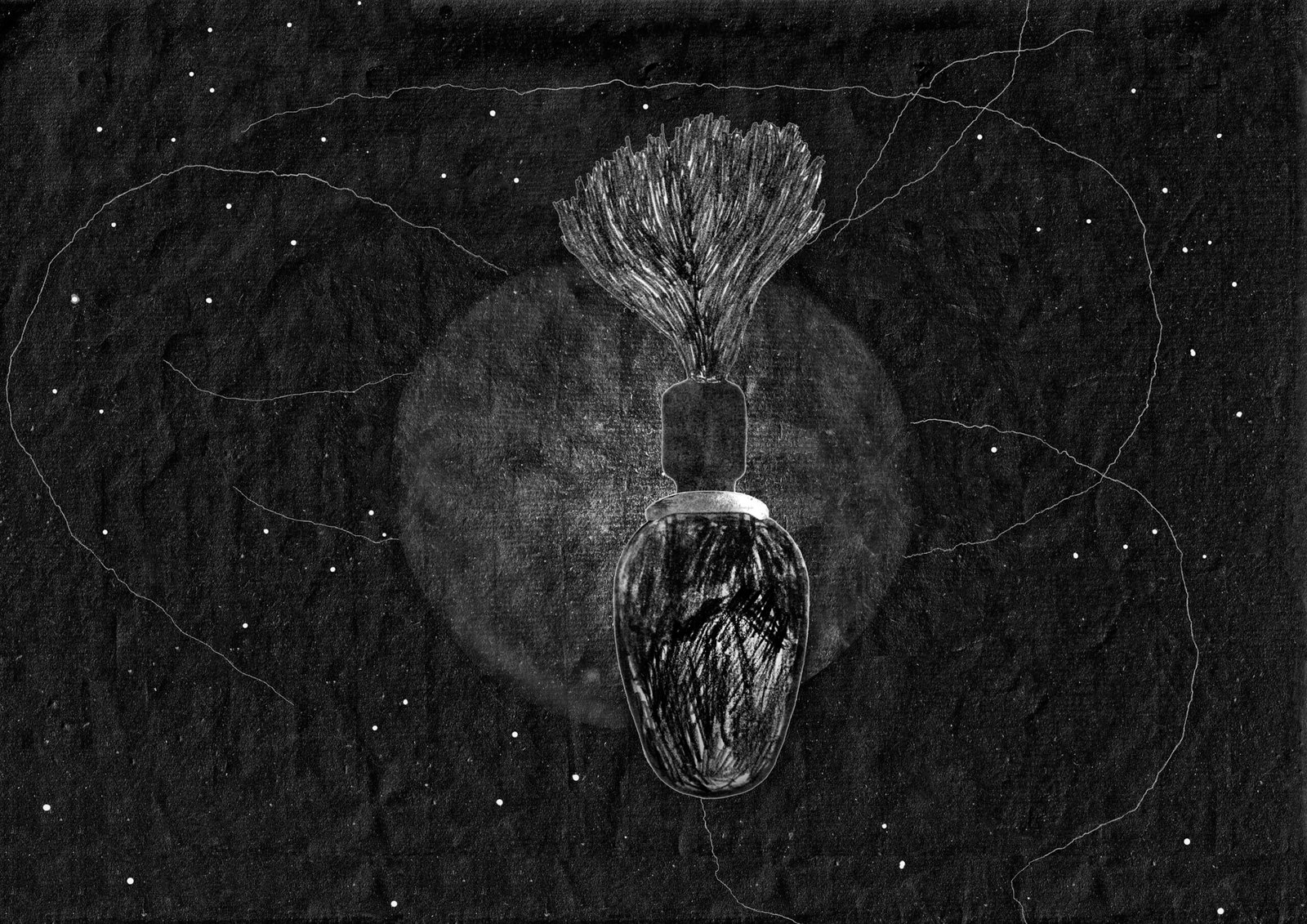
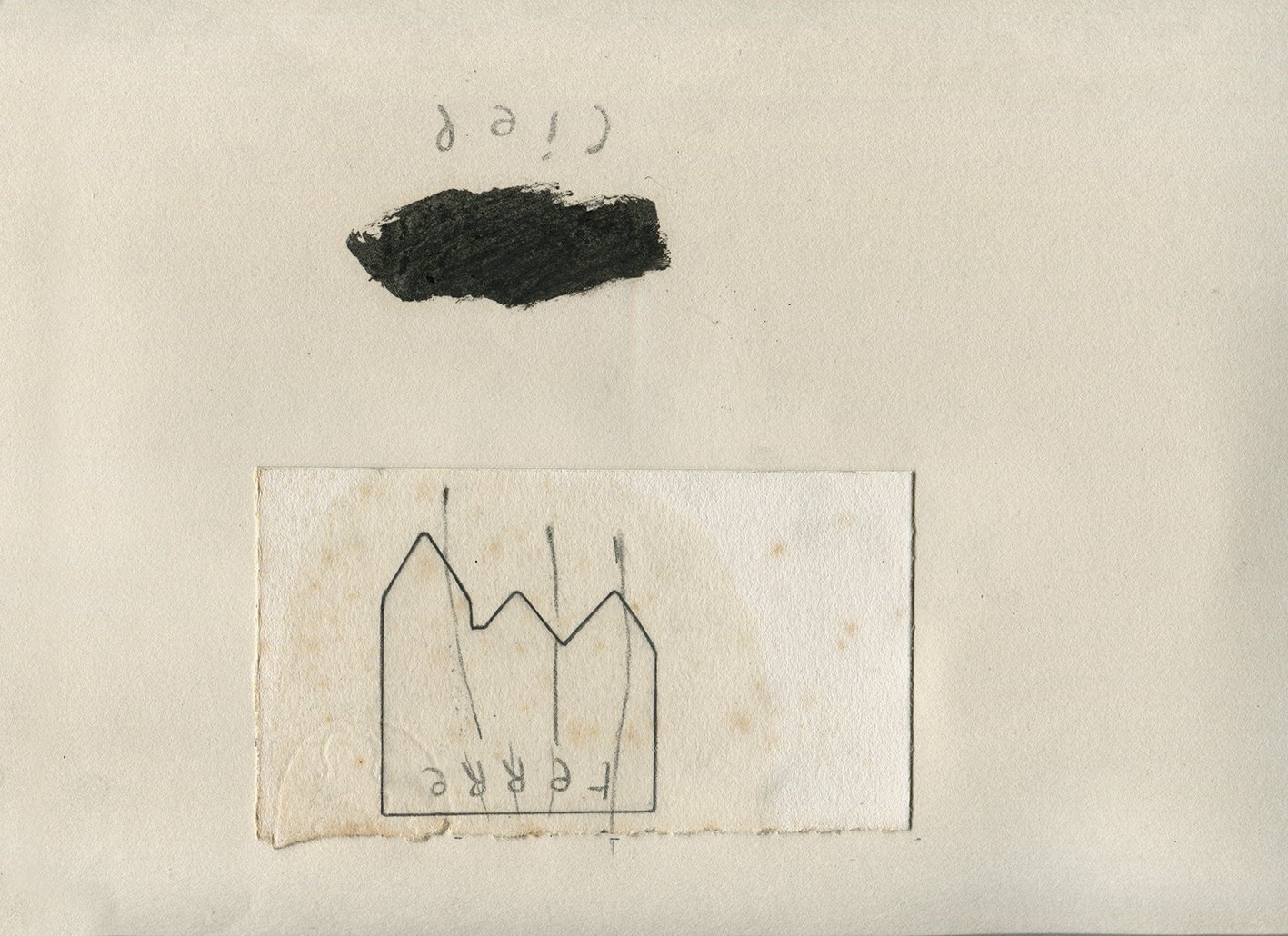
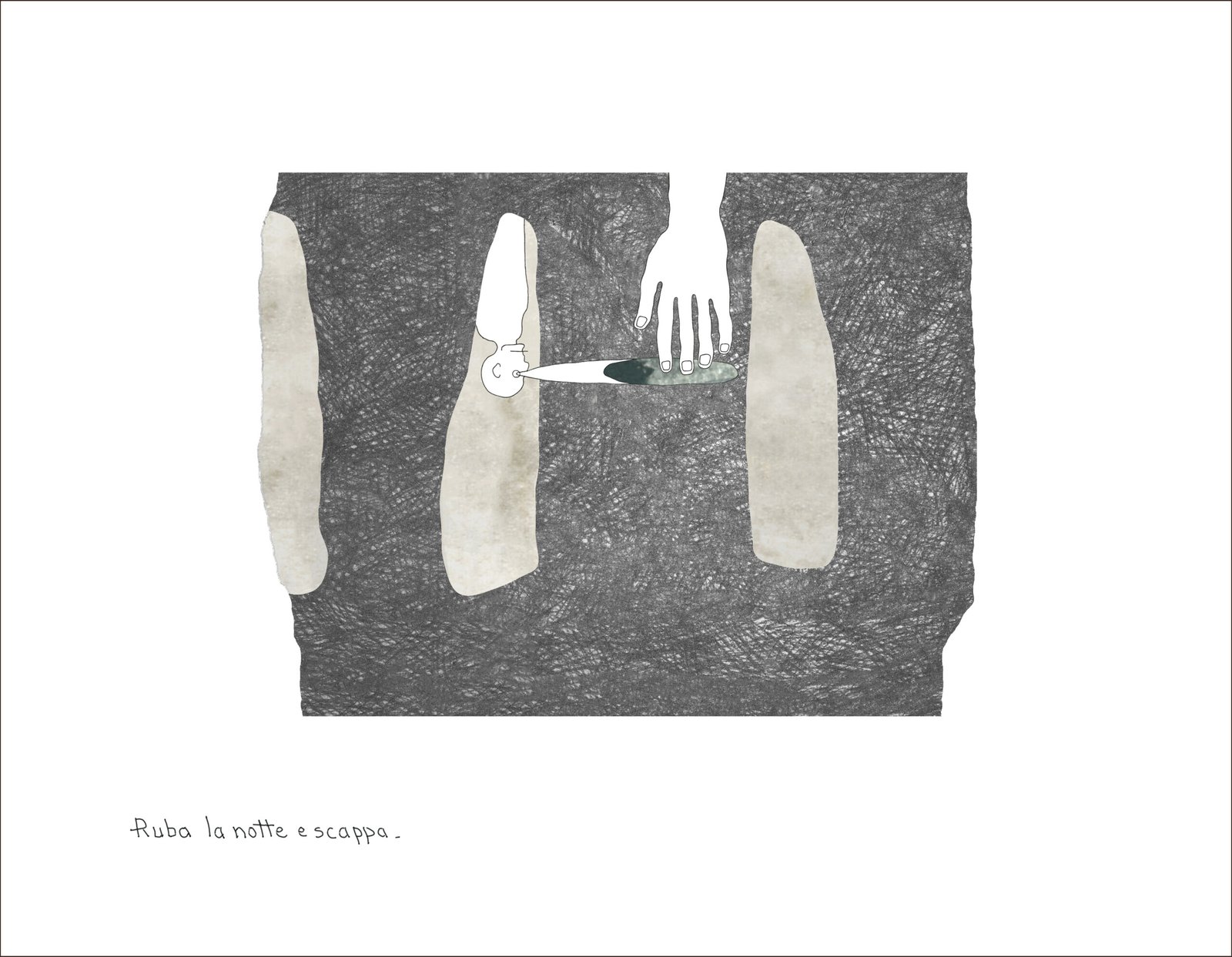
His drawings, often made with black pencils, diluted pigments, and touches of white paint, are silent scores. They capture instants, fragments of universes, inner landscapes. At times, a touch of color disturbs the balance, like an unexpected breath.
Grouped in series, these works explore recurring themes: transformation, connection, memory, introspection. They evoke constellations, roots, pasts. They are simple, but never simplistic. Their minimalism is concentration—a way of saying much with little.
An Aesthetic of Relation
What runs through all his creations is attention to relation—between materials, between forms, between beings. His works are not objects, but spaces of encounter. They speak of what connects, circulates, transforms.
There is, in this approach, a philosophical, almost spiritual dimension. Alain Quesnel does not seek to explain, but to make us feel. He invites us into deep listening, to perceive resonances, echoes, silences. His art is a meditation on the living, the fragile, the ever-moving.
A Work in Motion
Alain Quesnel does not offer answers, but openings. His work is an invitation to contemplation, to slowness, to presence. He reminds us that art can be a site of transformation, a space of circulation, a vector of energy.
His installations, drawings, volumes are sensitive landscapes, territories of connivance, intimate cartographies. They speak of us, of our memories, of our metamorphoses. They offer us a space to breathe, to dream, to feel.
Léna Quaisel – 2024